The art of the
unhurried day.
A house for those who take
their time seriously.
Carry nothing twice.
A new way to hold a thought, built on the science of collect, organize, do.
The morning,
composed.
The first ninety minutes, written from your night.
What the record
shows.
The day, shaped by what is true of you. Decided long before it begins.
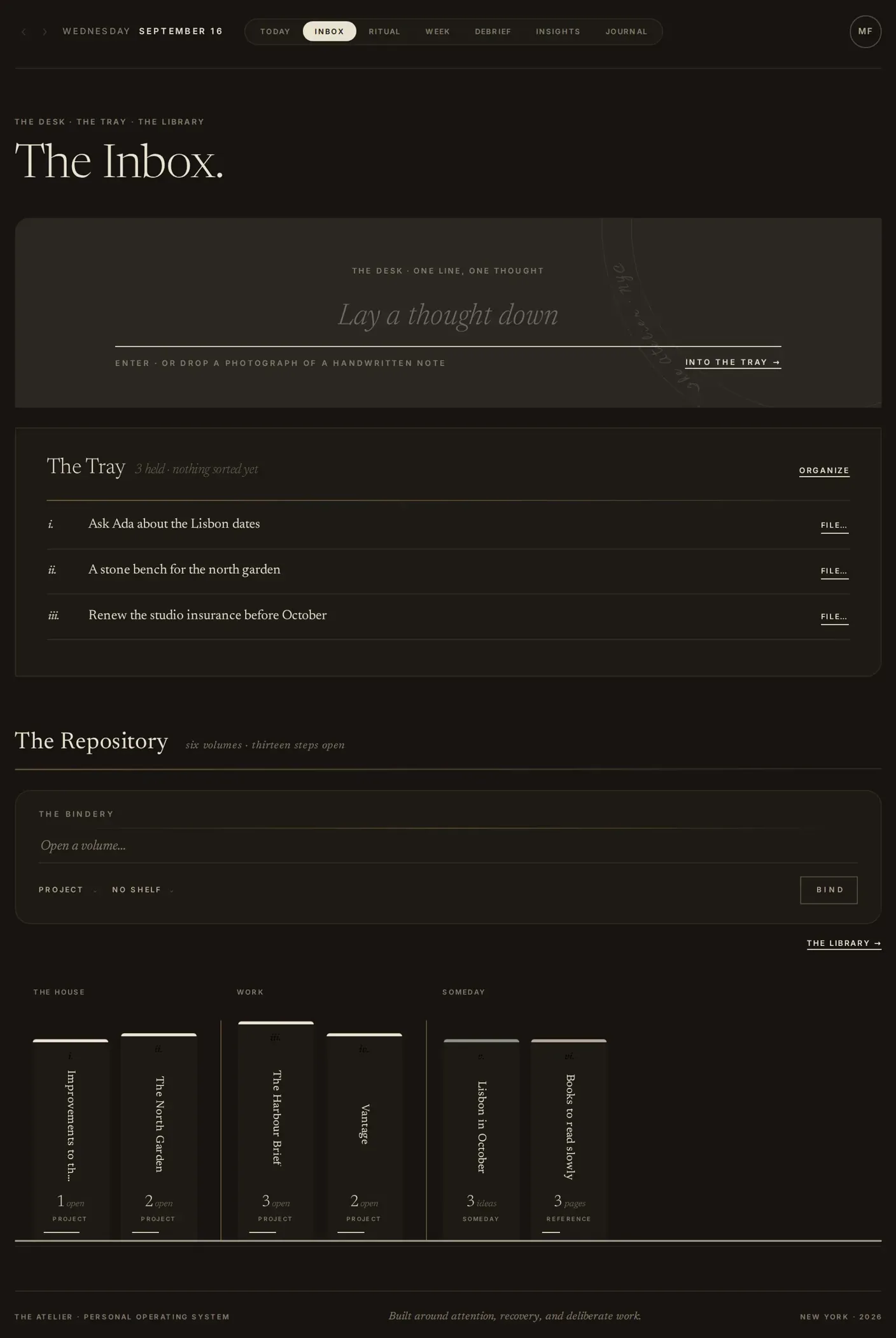
The tray holds three.
A thought written down is a thought released. The mind was never built to hold an open loop; it was built to think. Set the thing down in one line and it rests in the tray. At your word the Concierge reads each slip and files it where it belongs: a volume in the library, a day on the ledger, a reminder, the journal. What remains is the day, in order, and a mind with room in it.
This is the oldest discipline in the science of attention. Unfinished things pull at us whether or not we look at them, which is what Bluma Zeigarnik measured and what David Allen built a practice around. The remedy is not willpower. It is a place to put them.
Zeigarnik · Allen · Baumeister
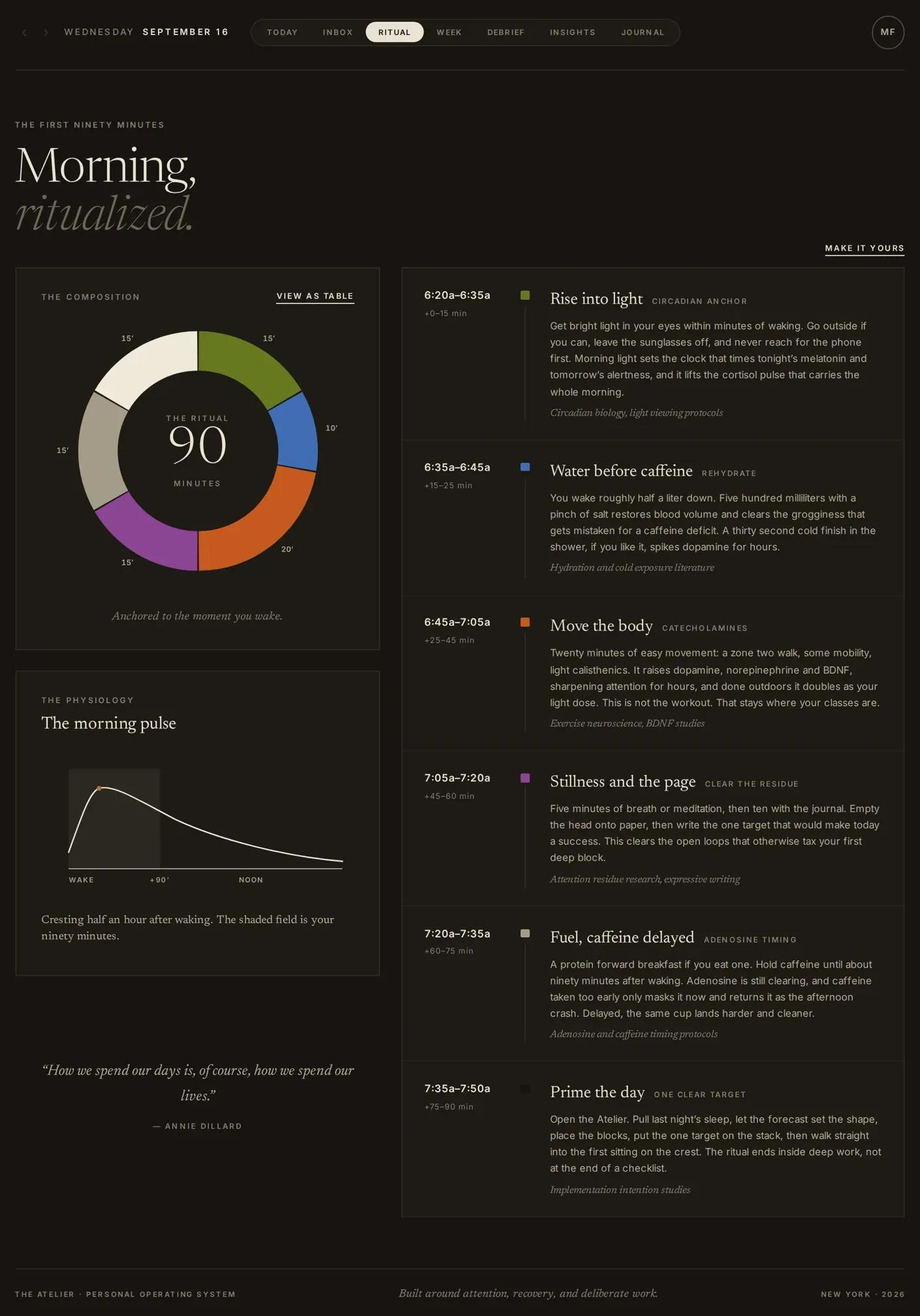
Anchored to the moment you wake.
Light first, then water. Movement before the mind is asked for anything. Stillness before the first decision. The composition runs ninety minutes from the moment you wake, and the reasoning is written beside each movement, so that nothing in the morning is done on faith.
Morning light sets the clock that will decide tonight's sleep. A pause before caffeine lets the night's adenosine clear. A walk wakes the body before the work. Each piece has been shown on its own; the Ritual arranges the pieces in their order.
Walker · Huberman · Panda
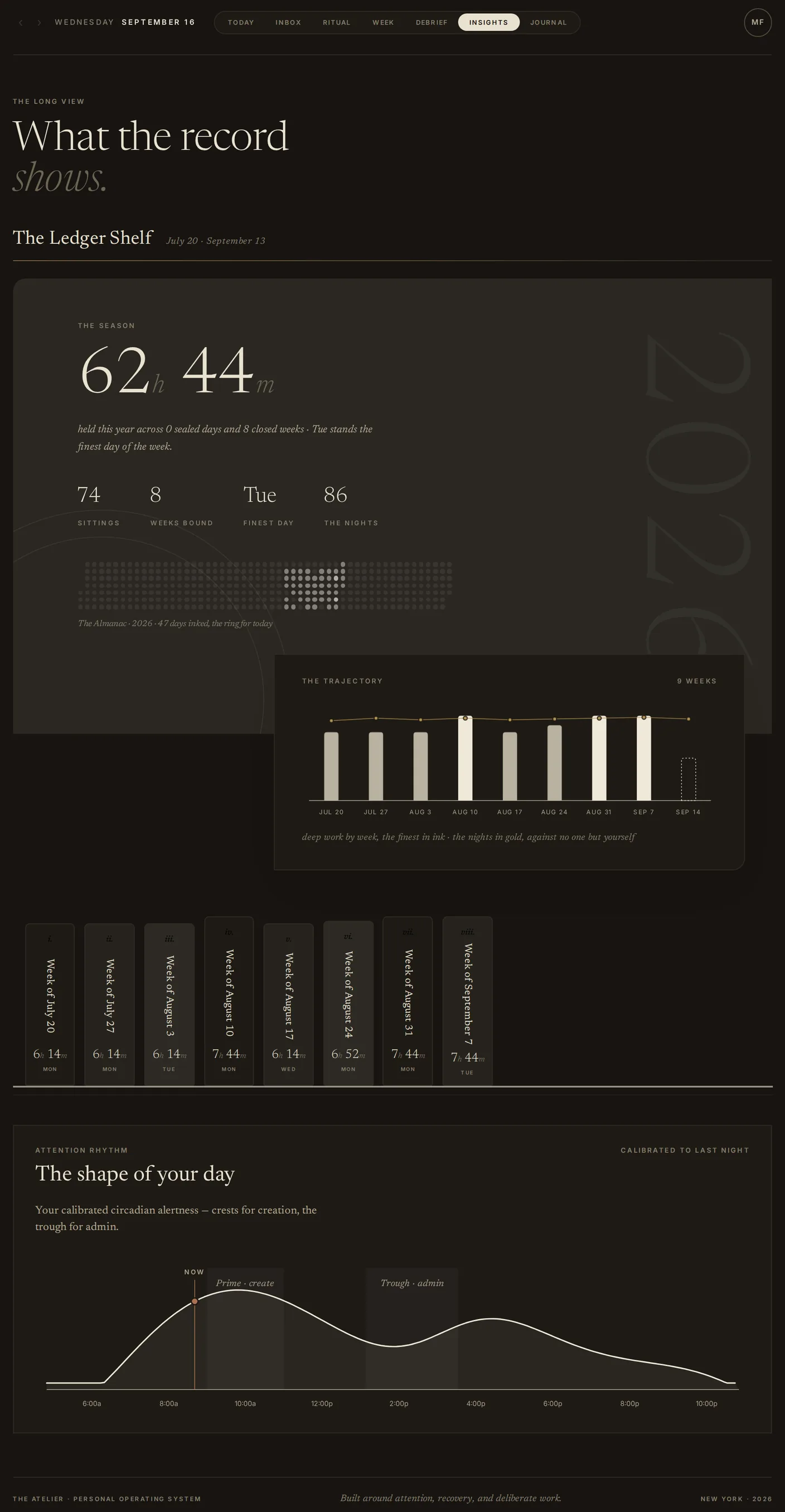
Your finest work is done before eleven.
The house keeps the record: every sitting, every night’s sleep, every week closed and every week that ran long, the whole year at a glance. Each morning the Preceptor reads it and the Concierge makes sense of it, so that what you learn about how you work becomes how you work: the hour of your finest work, the rest you are owed, the day that will bend if it is not guarded.
The shape of your day is your own circadian rhythm, read from your sleep rather than assumed: the crest for creation, the trough for what asks less, the sittings set on the rise. The weeks stand on the shelf as volumes, each with its nights beside its work, so the pattern shows itself: what a good night made possible, what a poor one cost, where the finest days fall. The brain works in waves of roughly ninety minutes, as Nathaniel Kleitman found. Attention left on the last task taxes the next, as Sophie Leroy showed. The deep sitting, undivided, is where the finest work is done, as Cal Newport has argued.
Kleitman · Leroy · Newport